Tooling is a fixed island in a variable-cost sea
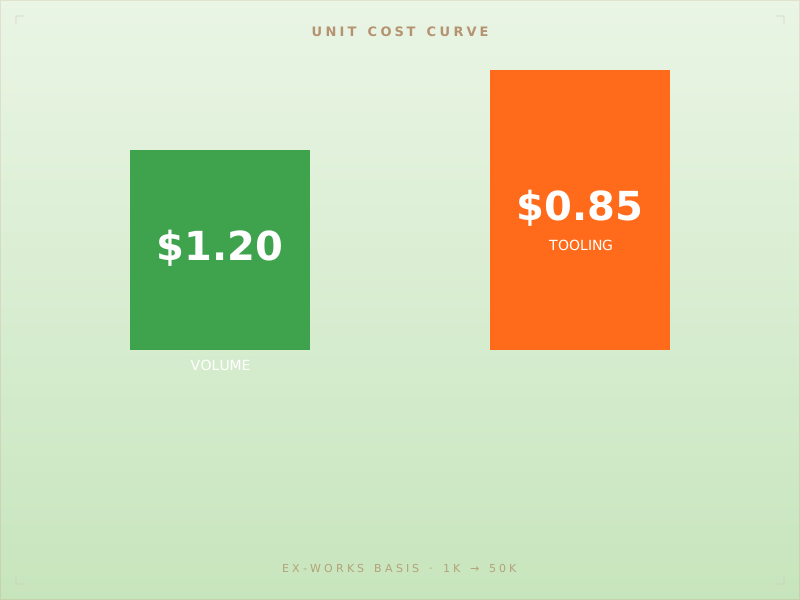
A twelve-design series cut as twelve independent molds pays twelve amortization curves. Cut as one family mold with interchangeable inserts and the fixed cost collapses while per-unit price stays flat across every design in the series. Before negotiating unit price, negotiate mold architecture — it is the single largest lever on a program under 50,000 units.
The chase figure is a marketing line item, not a production one
A 1:72 hidden chase adds no tooling you have not already paid for. Its real costs are randomization labor (inline weighing, sealed shuffle) and the customer-service load of a secondary market. Budget the chase as marketing spend and it stops looking like a manufacturing problem.
Carton math is quiet money
A display carton that packs 144 at 0.062 CBM versus 120 at 0.074 CBM is a 16% freight saving on a full container program — recurring, on every reorder, with no quality trade-off. Ask for the carton diagram before the quote, not after.
Paint stages scale non-linearly
Every additional paint stage past nine adds disproportionate labor on a hand-paint line, because stage overlap forces slower line speed. If a design needs more than nine stages, redesign the decoration plan, not the quote.
What a realistic cost split looks like
On a mid-size program (12 designs, 24,000 units), a healthy split is roughly: tooling 14%, materials 31%, paint and decoration 27%, packaging 12%, QC and compliance 6%, freight 10%. If your quote leans harder than 35% on any one bucket, ask which line item is hiding inside it.